
Basement finishing and renovation costs in Ontario vary widely based on factors like size, materials, labor, and design choices. Homeowners typically spend between $60 and $80 per square foot for a mid-level finish, although basic renovations can start as low as $40 per square foot. Understanding these price ranges helps homeowners plan an accurate budget and avoid unexpected expenses during their renovation.
Beyond material and labor costs, permits, local building codes, and project complexity also impact the overall price. Renovating a basement not only increases living space but can also add significant value to a home, making it important to weigh costs against potential benefits.
This guide breaks down all the key elements affecting basement renovation expenses in Ontario. It offers a clear overview to help homeowners and contractors navigate budgeting, timelines, and quality decisions confidently.
Average Basement Finishing & Renovation Costs in Ontario
Basement renovations in Ontario involve various factors affecting the overall expenses. Understanding price per square foot, typical project costs, and how different renovation types influence pricing helps homeowners budget effectively.
Cost Per Square Foot
In Ontario, finishing a basement generally costs between $60 to $80 per square foot for a mid-level finish. This range depends heavily on the region, the quality of materials selected, and design complexity.
Higher-end finishes or specialized work can push costs beyond $80 per square foot. Conversely, budget projects with standard materials and simple layouts may come in slightly below $60.
Labor costs, permit fees, and local building codes also play a role, especially in cities like Toronto and Ottawa. Certain elements such as waterproofing, plumbing, and electrical upgrades can increase the per-square-foot cost significantly.
Price Ranges for Common Projects
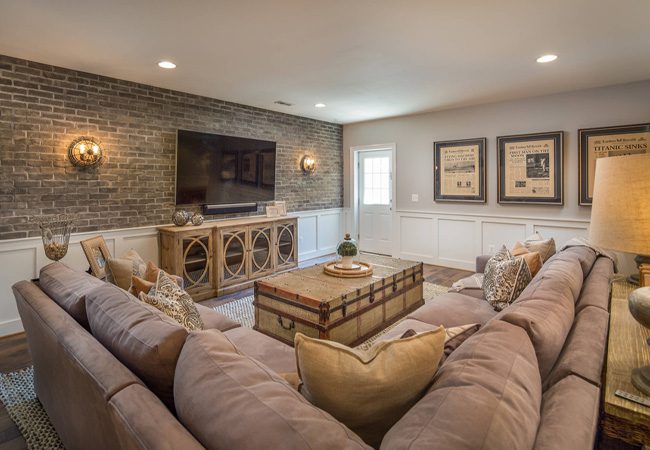
Typical basement finishing projects start around $30,000 for a 500 sq ft space with basic finishes. For a 1,000 sq ft basement, expenses can reach $60,000 to $80,000 depending on the level of customization.
Some common projects and their estimated price ranges include:
- Basic finishing: $50 to $60 per sq ft
- Mid-level finish (added features like drywall, flooring, lighting): $60 to $80 per sq ft
- High-end renovations (custom cabinetry, bathroom installation): $80+ per sq ft
Additional costs for plumbing or HVAC work can add thousands of dollars. Obtaining permits and ensuring code compliance typically adds 5–10% to the overall project cost.
Breakdown by Renovation Type
Costs vary based on the type of renovation undertaken. For instance:
- Finished living space: Includes drywall, flooring, basic plumbing, and electrical work, usually priced mid-range at $60 to $80 per square foot.
- Legal rental unit: Requires added expenses for separate entrances, egress windows, additional bathrooms, and stricter code compliance. Budgets should allow $70 to $90 per square foot or more.
- Basement waterproofing and structural updates: Often necessary before finishing, these can add $5,000 to $15,000 or more depending on damage and site conditions.
The inclusion of bathrooms, kitchens, or entertainment rooms will increase complexity and cost beyond basic finishing. Accurate budgeting requires considering all these elements upfront.
Key Factors Affecting Basement Renovation Costs
Basement renovation costs depend on multiple elements that directly influence the required investment. Factors like size, existing conditions, and the choice of materials shape the scope and budget of these projects.
Basement Size and Layout
The size of the basement is one of the most significant cost drivers. Larger areas demand more materials, labor, and time, naturally increasing the total expense. For example, a 1,000-square-foot basement will typically cost more than a 500-square-foot space, often reflected in a price per square foot range.
Layout complexity also affects costs. Open layouts with fewer walls reduce framing and finishing expenses. However, basements requiring multiple rooms, bathrooms, or specialty areas increase both design and construction costs due to added partitions, plumbing, and electrical work.
Existing Basement Condition
The current state of the basement influences how much work is needed before finishing can start. Basements with moisture problems, mold, or structural issues require additional repairs and waterproofing measures.
Concrete floors or walls needing sealing, as well as poor insulation, will add to costs. In some cases, addressing plumbing or electrical upgrades is necessary to meet local codes, which also raises expenses. A clean, dry, and level basement provides the foundation for a simpler, more cost-effective renovation.
Material and Finish Choices
Material quality and the level of finish directly impact overall costs. Basic finishes like painted drywall and simple flooring can stay in the $40–60 per square foot range. Mid-level options with upgraded flooring, built-in lighting, and cabinetry push costs higher, generally around $60–80 per square foot.
Premium finishes include custom millwork, luxury flooring, high-end fixtures, and advanced HVAC installations. These choices can drive the price up to $140 or more per square foot. Homeowners should balance aesthetics, durability, and resale value when selecting materials for their basement renovation.
Labour and Contractor Expenses
Labour and contractor costs are a significant portion of basement finishing expenses in Ontario. These costs include payments to general contractors, specialized tradespeople, and fees related to permits and inspections, all of which vary based on project complexity and scope.
General Contractor Fees
General contractors typically charge between 10% and 20% of the total renovation cost. They manage the schedule, coordinate subcontractors, and ensure the project meets quality standards.
Their fees cover supervision, procurement of materials, and handling unforeseen issues during the renovation. Hiring an experienced contractor can reduce delays and costly mistakes, especially for projects involving complex layouts or structural changes.
For a basement renovation costing $50,000, the contractor fee might range from $5,000 to $10,000. This investment often leads to smoother project execution and better budget control.
Specialized Trades Costs
Basement renovations frequently require work from electricians, plumbers, HVAC technicians, and carpenters. Each trade charges hourly or fixed rates depending on tasks like wiring, installing plumbing, ventilation systems, or framing walls.
Electricians might charge $70-$100 per hour, particularly for new wiring or lighting installation. Plumbing work can range from $80 to $120 per hour, depending on pipe complexity or fixture installation.
HVAC adjustments for basement heating or cooling generally add another $1,000 to $3,000. Skilled carpenters handle framing, drywall installation, and trim work, typically billing $50-$80 per hour.
Estimating these costs accurately requires assessing the basement’s size and required installations.
Permitting and Inspection Fees
Permits are mandatory for most basement renovations in Ontario to ensure code compliance and safety. Permit fees vary by municipality but generally fall between $500 and $2,000.
These fees cover inspections for electrical, plumbing, structural, and fire safety components. Homeowners should budget for multiple inspections, often included in the permit cost but occasionally billed separately.
Failing to obtain proper permits can lead to fines or complications during resale. Contractors usually help secure permits, but the cost is ultimately part of the renovation budget.
Major Cost Components Explained
Basement finishing costs in Ontario are driven by several key construction elements, each with distinct material and labor requirements. Understanding these components helps homeowners budget more accurately and make informed design choices.
Framing and Drywall
Framing establishes the structural skeleton for walls, room divisions, and ceilings in the basement. It typically involves wood or metal studs, with wood being more common in residential projects. The cost reflects both materials and labor intensity, depending on the complexity of the layout.
Drywall installation follows framing, providing smooth, paint-ready walls. It includes hanging, taping, mudding, and sanding, which requires skilled labor to ensure quality. Drywall costs can vary based on finish level—basic to high-end textures or moisture-resistant drywall for damp environments.
In Ontario, framing and drywall together generally represent a significant portion of the budget due to the extensive surface area involved. Upgrades like soundproofing or fire-resistant materials add to costs but improve comfort and safety.
Flooring Installation
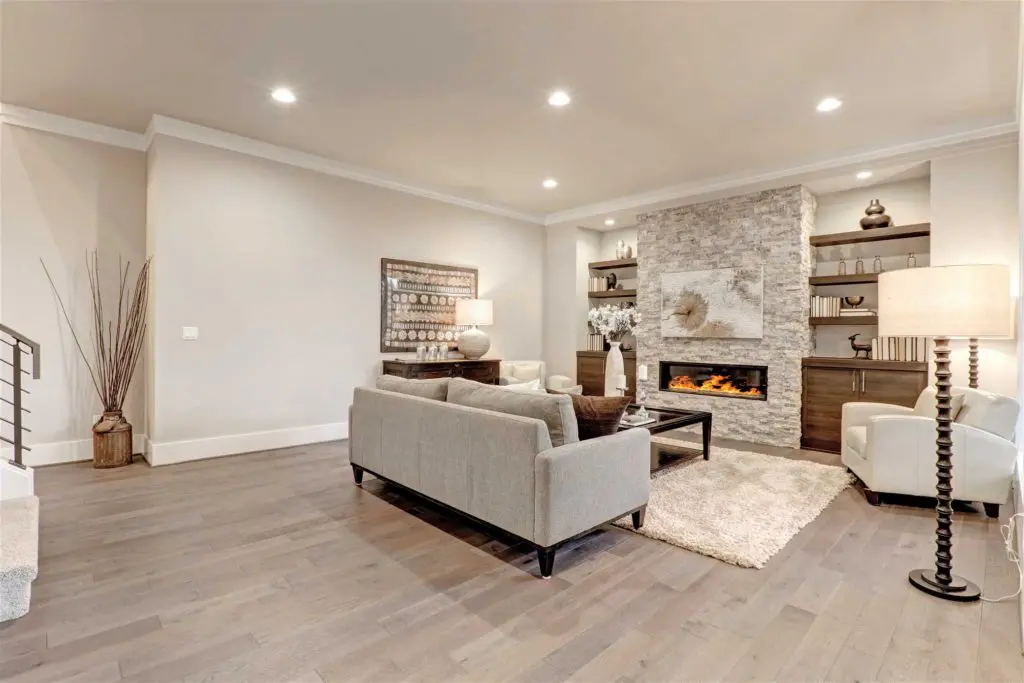
Flooring options significantly influence basement renovation budgets. Popular choices include vinyl plank, laminate, carpet, and engineered hardwood. Each has different price points, installation requirements, and durability.
Vinyl plank flooring is often preferred for basements due to its moisture resistance and affordability. Laminate offers aesthetic variety but can be vulnerable to moisture damage. Carpet provides warmth but requires moisture control to prevent mold or mildew.
Installation complexity depends on the basement’s condition. Uneven floors may need additional leveling, increasing costs. Underlayment materials for insulation or moisture barriers also add to expenses but enhance comfort and longevity.
Electrical and Lighting Upgrades
Basement renovations often require new or upgraded electrical systems to meet code and accommodate new lighting fixtures, outlets, and appliances. Electrical upgrades can include panel enhancements, rewiring, and installing dedicated circuits.
Lighting choices range from basic ceiling fixtures to recessed, track, or accent lighting, affecting both material and labor costs. LED fixtures are common for energy efficiency and longevity.
Proper electrical planning ensures safety, functionality, and compliance with Ontario’s building regulations. This work must be done by licensed electricians, contributing to higher labor costs but essential for a legal and safe renovation.
Plumbing and Bathroom Additions
Adding plumbing and a bathroom to a basement renovation involves careful planning and adherence to building codes. Key considerations include installing rough-ins for pipes and drains, and selecting appropriate fixtures that fit both the space and budget. The complexity of plumbing directly impacts both timeline and costs.
Rough-Ins and Plumbing Fixtures
Rough-ins are the foundational plumbing installations that prepare a basement for future bathrooms or kitchens. This includes installing supply lines for water, waste pipes, and vents within walls and floors before drywall goes up.
The cost of rough-ins depends on the distance from existing plumbing and the need for new sewage connections. In Ontario, it typically ranges between $1,500 and $4,000. Costs rise if the basement is unfinished or requires breaking concrete slab floors to run pipes.
Choosing plumbing fixtures—such as toilets, sinks, and faucets—varies widely in price. Basic fixtures are less expensive but may lack durability or style. Mid-range options provide a balance between cost and appearance, while high-end fixtures increase the overall budget substantially.
Bathroom Construction Costs
Constructing a basement bathroom usually adds a significant expense to renovation budgets. A standard 3-piece bathroom (toilet, sink, shower) generally costs between $10,000 and $25,000 in Ontario, depending on size and finishes.
Labour makes up a large portion of this cost due to the need for licensed plumbers and possibly electricians. Permits are mandatory and range from roughly $1,000 to $3,000 to ensure compliance with local codes.
Additional features such as waterproofing, ventilation fans, and energy-efficient fixtures increase costs but improve comfort and long-term durability. Homeowners should plan for these when budgeting to avoid unexpected expenses.
Insulation, Waterproofing, and Energy Efficiency
Basement finishing requires attention to insulation, waterproofing, and energy efficiency to ensure comfort, safety, and cost savings. These elements can significantly affect the overall renovation budget and the long-term performance of the basement. Investing wisely in each area helps maintain a dry, warm, and efficient living space.
Insulation Methods and Pricing
Basement insulation options vary by material and installation method, with prices influenced by thermal performance and labor. Common types include spray foam, rigid foam boards, and fiberglass batts.
- Spray foam provides a high R-value and excellent air sealing but costs between $2 to $4 per square foot.
- Rigid foam boards offer good moisture resistance and cost around $1.50 to $3 per square foot.
- Fiberglass batts are less expensive at $0.50 to $1.50 per square foot but require vapor barriers to prevent moisture issues.
Installation costs depend on basement size and wall condition. Proper insulation reduces heat loss and can lower heating expenses in Ontario’s cold climate.
Waterproofing Options
Waterproofing is critical to avoid basement moisture problems, mold, and structural damage. Interior and exterior solutions vary depending on existing conditions and budget.
- Exterior waterproofing involves excavation, membrane application, and drainage systems, costing between $25,000 and $50,000 or more for an average basement.
- Interior waterproofing uses sealants, drainage channels, and sump pumps, typically priced between $5,000 and $15,000.
- French drains and sump pump installation are common elements in both approaches.
Choosing effective waterproofing reduces the risk of leaks and contributes to a healthier basement environment.
Energy-Efficient Upgrades
Energy efficiency in a basement renovation includes window choices, air sealing, and HVAC considerations. These upgrades improve comfort and reduce utility bills over time.
- Installing energy-efficient egress windows enhances natural light and complies with Ontario building codes. Costs may range from $1,500 to $5,000 per window.
- Air sealing with appropriate insulation techniques prevents drafts and heat loss.
- Adding heat recovery ventilators (HRVs) or improving existing HVAC systems helps maintain air quality and consistent temperatures.
Energy-efficient improvements can qualify for rebates or incentives, helping offset initial expenses while boosting the basement’s overall value.
Design, Finishing Touches, and Custom Features
Basement finishing goes beyond framing and drywall. The choice of cabinetry, lighting, and decorative elements shapes the space’s functionality and style. These decisions also impact the overall renovation cost and home value.
Custom Cabinetry and Storage
Custom cabinetry in a basement can maximize limited space while adding tailored storage solutions. Homeowners often invest in built-in shelves, closets, or entertainment centers designed to fit specific dimensions. This approach improves organization and prevents clutter in smaller areas.
Materials and finishes vary widely. Options like MDF, plywood, or solid wood influence both durability and price. Custom storage units typically raise the renovation cost by $1,000 to $5,000 depending on size and complexity.
Proper ventilation and moisture-resistant materials are crucial in basements to avoid damage. Professionals often recommend sealed finishes to protect against humidity. Well-planned cabinets boost usability and create a polished look.
Lighting and Smart Home Integration
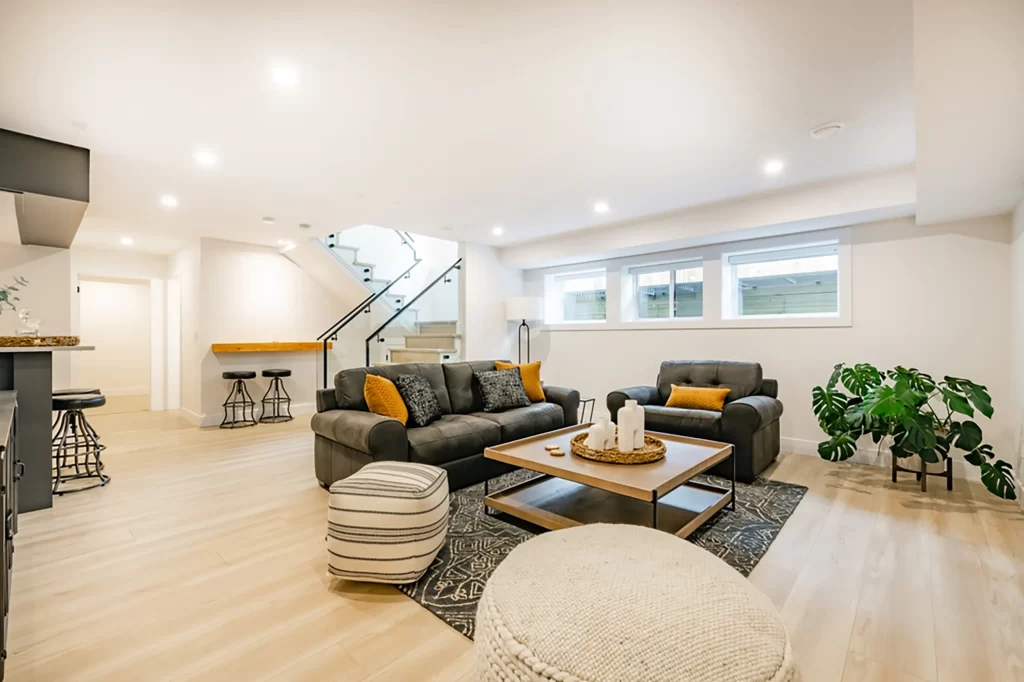
Effective lighting changes the feel of a basement from dark to inviting. Layered lighting—ambient, task, and accent—is essential. LED recessed lights are popular for energy efficiency and even illumination.
Smart home features can include automated lighting controls, dimmers, and sensors. These technologies improve convenience and reduce energy consumption. For example, motion sensors turn lights on when entering a room and off when it’s empty.
Installing smart lighting systems typically adds $500 to $2,000 to the project, depending on sophistication. Incorporating voice control or app-based management is increasingly common. Well-designed lighting complements the basement’s intended use, whether for relaxation or work.
Paint, Trim, and Decorative Details
Paint choices affect both aesthetics and maintenance. Light, neutral colors open up basement spaces, making them appear larger and brighter. Specialized paints with anti-mold formulas are recommended in moist environments.
Trim and molding enhance the finished look. Baseboards, crown molding, and door casings add architectural detail and hide construction seams. These elements range from basic MDF trim to premium hardwood options, influencing cost accordingly.
Decorative touches like wainscoting or paneling serve both style and durability purposes. They help protect walls from dings and add texture to plain surfaces. Selecting finishes that resist wear and humidity is important to maintain appearance over time.
Cost-Saving Tips and Financing Options
Homeowners can reduce basement finishing costs by carefully selecting materials and finishes. Opting for mid-range options instead of high-end fixtures can significantly lower spending without sacrificing quality. Planning the layout efficiently also minimizes unnecessary framing and drywall work.
DIY work on tasks like painting or installing trim can cut labor costs. However, critical installations such as electrical or plumbing should be handled by licensed professionals to comply with Ontario building codes and ensure safety.
Permits and inspections add to the overall budget but are essential for legal compliance and potential resale value. Checking local regulations early can prevent costly delays or fines.
Financing options available include personal loans, home equity lines of credit (HELOCs), and specialized renovation loans. HELOCs often provide lower interest rates, making them a popular choice for larger projects.
Some lenders offer custom renovation financing plans with flexible repayment terms. It is advisable to compare interest rates and fees from multiple sources before deciding.
| Financing Option | Description | Key Advantage |
|---|---|---|
| Personal Loan | Fixed amount with set repayment schedule | Quick access, no collateral |
| Home Equity Line of Credit | Borrow against home equity with variable rates | Lower interest, flexible use |
| Renovation Loan | Specifically designed for home projects | May include deferred payments |
By combining thoughtful budgeting with appropriate financing, homeowners can complete basement renovations within their financial means.
Ready to transform your Basement and maximize its value? Contact Lifetime Building Services today to explore how our expertise in construction management, renovations, and contracting can help you achieve your renovation goals