
Renovating an office in the GTA requires clear priorities, a solid plan, and the right team so your project finishes on time, on budget, and compliant with local codes. Use a step by step checklist that covers planning, design, permits, contractor selection, infrastructure upgrades, and final inspections to avoid surprises and keep your business running smoothly.
This guide walks you through practical actions for each phase from defining scope and budgets to optimizing layouts and upgrading tech so you can make decisions with confidence. Expect real world tips for working with contractors, navigating GTA regulatory requirements, minimizing downtime, and completing post renovation steps that lock in value.
Planning Your Commercial Office Renovation
Identify clear business drivers, timeline constraints, and end user needs up front. Prioritize measurable outcomes capacity, workflow efficiency, brand visibility, and regulatory compliance so you can make trade offs during design and procurement.
Setting Renovation Goals
Define specific, measurable goals for the renovation. List targets such as headcount capacity (e.g., increase from 45 to 70 workstations), percentage of private offices vs. open workstations, target collaboration area square footage, and desired amenities (phone rooms, lactation space, secure storage). Include performance goals like improved acoustics (NC rating target), daylighting percentage, and HVAC improvements for better air changes per hour.
Map goals to business metrics: revenue per employee, occupancy rates, or lease negotiation leverage. Add hard constraints such as preserving core structural elements, heritage facade requirements if applicable in GTA municipalities, or minimum parking stalls per local zoning. Assign priority levels (Must / Should / Nice-to-have) so vendors and designers know which items are non-negotiable.
Establishing a Realistic Budget
Start with a base construction budget per rentable square foot tailored to the GTA market and your building class. Use three budget bands: conservative (basic finishes), standard (market-appropriate), and premium (high-end finishes and MEP upgrades). Include these line items: demolition, new partitions, finishes, HVAC/electrical/plumbing, data/AV, permits & inspections, contingency (10–20%), design fees, and moving/temporary space costs.
Get at least two qualified cost estimates early one schematic-level and one detailed so you can reconcile scope with cost. Budget for soft costs separately: tenant improvement allowance negotiations, municipal permit fees, code-mandated accessibility upgrades, and incremental property taxes. Track budget changes with versioned cost logs to avoid scope creep.
Coordinating with Stakeholders
Assemble a stakeholder matrix listing decision authority, contact, and response SLA for each role: executive sponsor, facilities manager, IT lead, HR, legal, and tenant reps. Schedule weekly progress meetings and use a shared project schedule (Gantt) with milestone sign-offs for design freeze, permit submission, procurement, and move-in.
Communicate constraints to contractors early occupied-floor phasing, noise curfews, and waste removal routes and document approvals in writing. Coordinate IT cutovers and security access changes to minimize downtime; plan for at least one full weekend for network and phone migrations. Use an RACI chart to prevent miscommunication and to ensure accountability during procurement and construction.
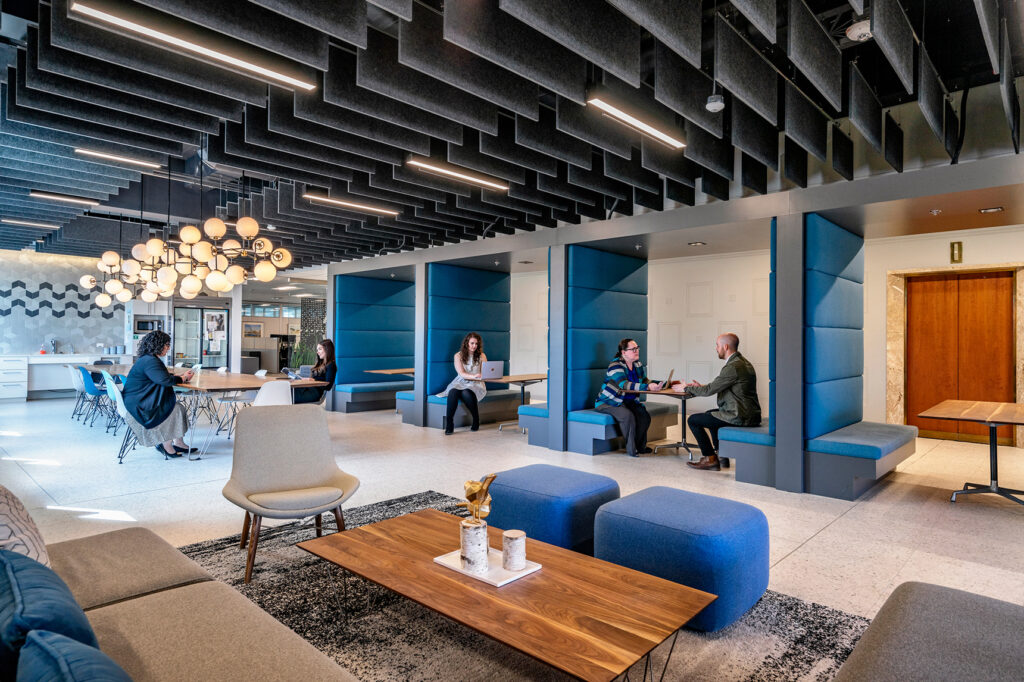
Design and Space Optimization
Prioritize efficient circulation, clear work zones, and material choices that reduce maintenance and lifecycle costs. Focus on layouts that support your core activities, reinforce brand cues, and use durable, low-VOC finishes.
Maximizing Functionality and Workflow
Map daily tasks and movement patterns before altering walls or furniture. Create dedicated zones focused work, collaboration, reception, and quiet rooms sized to actual headcount and peak usage rather than theoretical capacity. Use a simple diagram to show circulation paths and avoid bottlenecks at entries, printers, and meeting rooms.
Specify furniture on casters for flexible reconfiguration and choose benching systems with integrated power to reduce cable clutter. Plan sightlines so managers and team leads can observe work without interrupting; add glazing or low partitions where needed. Reserve 5–10% of floor area for informal huddle spaces and phone booths to limit interruptions in open-plan zones.
Incorporating Brand Identity
Translate your brand into tangible elements: a consistent palette, key materials, and signature signage. Choose 2–3 primary brand colors and apply them to focal features reception wall, feature lighting, or carpet tiles rather than painting entire rooms to avoid visual fatigue.
Embed brand values with material choices and space types. If your brand emphasizes collaboration, increase meeting room minutes per person and show brand narratives on curated wall graphics. Standardize finishes and hardware across the office so visitors perceive cohesion; produce a one-page finish schedule that lists paint codes, flooring types, and signage specs for contractors.
Choosing Sustainable Materials
Select low VOC paints, GREENGUARD certified carpets, and FSC-certified wood to reduce indoor pollutants and support procurement compliance. Prioritize modular ceiling and flooring systems that allow future tile replacement without full demolition to lower long-term waste.
Specify recycled-content gypsum board and water-efficient fixtures to meet Toronto and provincial sustainability incentives. Require material cut sheets and third party certifications in bids, and set a minimum lifecycle cost target rather than only upfront price. Track diverted construction waste percentage in the contract to ensure demolition materials are recycled or reused.
Regulatory Compliance in the GTA
You must follow Toronto and GTA specific rules that affect design, safety, and timelines. Pay attention to building code requirements, permit types and timelines, and accessibility obligations to avoid fines and construction delays.
Understanding Building Codes
Toronto enforces the Ontario Building Code (OBC) and local bylaws that govern structural changes, fire separation, egress, and mechanical/electrical systems. For office renovations, you must verify whether your work is classified as a renovation, change of use, or tenant fit out each has different OBC compliance triggers.
Key items to check:
- Floor loading and structural alterations when removing or adding walls.
- Fire-rated assemblies, sprinkler requirements, and smoke alarm placement where occupancy or travel distances change.
- HVAC and ventilation upgrades for altered layouts or increased occupant loads.
Engage a licensed architect or engineer early to produce drawings that reference specific OBC sections. That reduces review cycles and prevents rework during inspections.
Acquiring Permits
Most commercial office renovations in Toronto require building permits and possibly plumbing, HVAC, and electrical permits. Start with a pre-consultation at the municipal permits office or use the City’s online portal to confirm required applications.
Typical permit steps:
- Submit permit application with sealed drawings, site plan, and trade schedules.
- Pay review fees and respond to municipal review comments within specified timelines.
- Book inspections for foundation, framing, services, and final occupancy.
Expect municipal review times to vary; factor 2–8 weeks for simple tenant improvements and longer for change-of-use or major structural work. Keep a permit tracker and a digital folder of all approvals to present at inspections.
Meeting Accessibility Standards
You must comply with the Accessibility for Ontarians with Disabilities Act (AODA) and applicable OBC accessibility provisions. Accessibility affects entrances, washrooms, routes within the suite, signage, and adjustable workstations.
Practical requirements to address:
- Accessible entrance or ramp, or clear signage directing to an accessible entrance.
- Accessible washroom stalls with grab bars, maneuvering clearances, and compliant fixtures.
- Door widths, corridor clearances, and turning radii that meet mobility and service animal needs.
Incorporate these elements into early design drawings and include verification notes for inspectors. Consider consulting an accessibility auditor for complex layouts to ensure compliance and reduce costly post-construction changes.
Selecting Contractors and Project Partners
Choose partners who match your schedule, budget, and compliance needs. Prioritize firms with relevant GTA experience, clear communication practices, and verifiable financial and insurance standing.
Evaluating Vendor Credentials
Require proof of licensing and insurance specific to Ontario and the GTA, including WSIB clearance, general liability insurance, and a current Master Business License or contractor licence where applicable. Verify municipal trade registrations for electrical, plumbing, and HVAC work when those trades are part of the scope.
Assess financial stability by asking for recent audited financial statements or a letter from a bank confirming credit lines. Confirm safety programs and training records; request a company safety manual and recent incident rates. Look for industry certifications (e.g., COR, LEED, BOMA) that align with your project goals.
Use a short checklist during initial calls: licence numbers, insurance limits, WSIB clearance, safety certifications, and evidence of local GTA projects completed in the past 24 months.
Requesting Detailed Proposals
Ask for a written proposal that separates costs by trade, materials, labour hours, contingencies, and allowances. Require a phased schedule with milestone dates, critical-path items, and proposed subcontractors named for major work (demolition, MEP, finishes).
Specify deliverables: permit procurement, waste removal plan, site protection measures, and quality control steps. Include payment terms tied to milestones and holdbacks for deficiencies. Request a change-order process with hourly rates and a not-to-exceed markup percentage.
Compare at least three proposals using a simple scoring table: cost, timeline, local experience, quality of materials, and clarity of contract terms. Use that comparison to shortlist bidders for interview and negotiation.
Checking References and Past Projects
Contact at least three recent clients for projects completed within the last two years in the GTA. Ask about schedule adherence, budget control, responsiveness to change orders, and how the contractor handled tenant coordination or phased occupancy.
Inspect completed sites in person where possible. Look for finish quality, alignment with contract drawings, and evidence of proper MEP installation. Request photos, as-built documentation, and warranty files for comparable projects.
Ask for a list of key subcontractors and suppliers and then verify those firms’ reliability. Check online reviews and industry complaints, but weigh direct client interviews and site visits more heavily when making your final selection.
Managing the Renovation Process
You’ll coordinate timelines, inspect workmanship, and limit operational disruption while keeping costs and safety under control. Clear milestones, documented quality checks, and practical mitigation steps will keep your project on track.
Scheduling Timelines
Create a master schedule with fixed milestones: permit approval, demolition start, MEP rough-ins, inspections, finishes, and move-in. Assign durations and float for each task, then map dependencies so you know which delays will cascade.
Use a shared Gantt chart or project-management platform and update it weekly. Require contractors to submit 2-week lookaheads and daily field reports. Lock in inspection windows with the municipality early; book third-party testing (air, acoustics, materials) in advance.
Set phased occupancy dates if parts of the space must stay operational. Define hard shutdown periods for noisy or disruptive work and communicate them to staff at least two weeks ahead. Add contingency time typically 10–15% of the schedule for weather, material lead times, or permit changes.
Monitoring Quality Control
Establish a quality-control (QC) checklist tied to contract specifications: materials, finishes, firestopping, HVAC balancing, and accessibility features. Use photo-verified punch lists and require contractors to clear items in a defined timeframe (e.g., 7 days for critical items).
Hold weekly site walkthroughs with the project manager, architect, and prime contractor. Document findings in a centralized log with assigned owners and due dates. Insist on factory or shop certifications for specialty items (glazing, millwork) before installation.
Schedule intermediate inspections at completion of each trade’s scope rather than waiting for final review. Require testing and commissioning reports for systems (HVAC, fire alarm, controls) and retain 5–10% of payment until all critical systems are certified and punch-list items closed.
Mitigating Workplace Disruptions
Segment the worksite with clear physical barriers and signage to separate construction zones from occupied areas. Implement dedicated access routes for trades and deliveries to avoid high-traffic employee corridors.
Coordinate HVAC and dust-control measures: negative-pressure barriers, self-contained HEPA units, and daily cleaning protocols. Set specific noisy-work windows (e.g., 9–11 a.m.) and rotate them to minimize repeated impact on the same teams.
Communicate changes through a single point of contact: weekly status emails, an on-site notice board, and a hotline for urgent issues. Provide alternative work arrangements when needed—temporary desks, remote days, or meeting-room swaps—and document compensation or policy changes in writing.
Technology and Infrastructure Upgrades
Upgrade backbone cabling, Wi‑Fi, power distribution, and security hardware to support higher bandwidth, denser device counts, and future expansion. Prioritize reliable uptime, manageable infrastructure, and clear pathways for future upgrades.
Integrating Modern IT Solutions
Assess current bandwidth usage and plan for at least 2–3x projected growth over five years. Replace aging Cat5e with Cat6A or fiber backbone between telecom rooms to support 10 GbE and reduce electromagnetic interference. Zone your cabling pathways and label both ends for faster troubleshooting.
Upgrade Wi‑Fi to Wi‑Fi 6/6E access points placed according to a heat‑map survey; aim for one AP per 1,500–2,000 sq ft in open offices and one per 800–1,200 sq ft in dense collaboration zones. Use a cloud‑managed controller for centralized firmware updates and analytics.
Standardize on PoE++ switches where you need powered devices (phones, APs, cameras) and provision UPS protection for core switches and servers. Document IP addressing, VLAN, DNS, and DHCP schemes, and keep offsite backups of configuration files.
Enhancing Security Systems
Start with perimeter access control using card or mobile credential readers at all external doors. Integrate elevator and internal door locks with time‑based access levels to restrict sensitive areas after hours.
Install a networked camera system with 4K cameras for key entry points and 1080p for general coverage; store footage on a hybrid NVR/cloud solution with 30–90 day retention depending on compliance needs. Ensure cameras support ONVIF and POE for interoperability and easier power management.
Implement an intrusion detection system and monitor environmental sensors (water, temperature, smoke) in server rooms. Use centralized logging (SIEM) for alerts and retain audit trails for at least 90 days. Encrypt storage and require MFA for all admin access to reduce risk of unauthorized changes.
Final Inspections and Post-Renovation Steps
You will verify that all work meets contract specs, safety codes, and your operational needs. Then you’ll close out documentation, resolve outstanding defects, and prepare the space for a phased or full move-in.
Conducting Walkthroughs
Schedule at least two walkthroughs: a contractor led inspection and a client-focused review. During the contractor-led inspection, confirm systems operation HVAC setpoints, lighting circuits, fire alarms, plumbing fixtures, and access controls using manufacturer checklists and as-built drawings.
Bring these items to every walkthrough:
- Project plans and permit approvals
- Equipment operation manuals and warranty sheets
- A tablet or clipboard for real-time photo documentation
During your client review, test ergonomics and workflow: measure desk heights, verify clearances in corridors and meeting rooms, and run AV and network checks in occupied zones. Record any deviations with photos, timestamps, and specific location notes.
Reviewing Punch Lists
Create a single, prioritized punch list and assign each item a responsible party and deadline. Categorize entries as Safety, Code Compliance, Functional, or Cosmetic to focus resources on impacts to operations first.
Use this punch-list workflow:
- Log items in a shared cloud spreadsheet or project app.
- Assign trades and set target completion dates.
- Require photographic proof of remediation and sign-off from the site manager.
Verify completion by returning to the exact location and re-testing systems where applicable. Close items only after you confirm performance and obtain warranty documentation for repaired or replaced components.
Preparing for Move-In
Coordinate a phased move-in plan that aligns with cleaning, security activation, and IT cutover windows. Book professional cleaning—dust removal, floor treatment, and HVAC filter replacement at least 48 hours before occupancy in each zone.
Confirm these operational items before staff return:
- Final utility meter readings and account transfers
- Network rack labeling, DHCP/VLAN assignments, and Wi‑Fi heat‑map verification
- Emergency lighting, exit signage, and first-aid/OSHA compliance checks
Provide occupants with a building guide: floor plans, emergency procedures, maintenance contacts, and warranty summaries. Schedule a 30‑day and 90‑day post-occupancy review to capture latent defects and fine-tune building systems.
Planning an office remodel in the GTA? Let our expert construction management team handle the details.
Get a free consultation: 📞 905-564-0162 | ✉️ info@lifetimebuildings.ca